Simple ABA Guide for Families
ABA Methods vs ABA Services: What Parents Should Know
Applied Behavior Analysis, often called ABA, includes methods and services that are connected, but they are not the same. Understanding the difference can help families use supportive strategies with more clarity, confidence, and care.
By Connectism Team
Updated July 2026
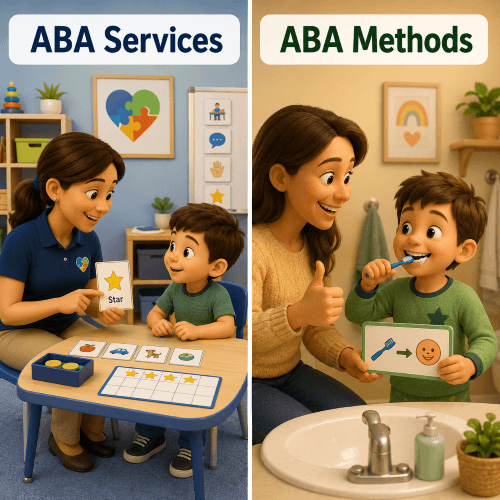
Many families hear the term ABA, which stands for Applied Behavior Analysis, and often immediately think about therapy services, clinics, medical insurance coverage, providers, or formal treatment plans. That is because ABA services are often the most visible way people hear about ABA.
However, ABA itself refers to the scientific principles of learning and behavior. Those principles can be used in many ways, including in everyday life, parenting, teaching, and skill-building.
What Are Applied Behavior Analysis (ABA) Methods?
ABA stands for Applied Behavior Analysis, a natural science discipline focused on the principles of learning and behavior. In everyday language, ABA methods help us understand how children learn and what motivates their behavior, so we know how to teach new skills more effectively.
ABA methods often use reinforcement, encouragement, rewards, clear instructions, visual supports, and consistent practice. These strategies can help children build skills in small steps, including communication, independence, daily routines, and positive behavior.
Positive Reinforcement
Positive reinforcement means adding something encouraging or rewarding after a child tries a skill or behavior. This could be praise, a favorite activity, a small reward, extra playtime, or another meaningful motivator for that child.
For example, when a parent praises a child for sitting for one minute, cleaning up one toy, asking for help, or trying one tiny bite of a new food, that parent may be using a learning method that connects effort with encouragement.
Negative Reinforcement
Negative reinforcement means removing something unpleasant after a skill or behavior happens. This does not mean punishment.
For example, if a child feels anxious during a transition, a parent may reduce pressure by offering a short break after the child makes a small effort to transition. The goal is to support learning while reducing stress, making learning more manageable for the child.
ABA methods are not limited only to autism support, therapy settings, or professionals. Reinforcement, clear expectations, small steps, motivation, and consistent practice are also used in teaching, coaching, parenting, workplace leadership, and everyday learning.
What Are ABA Services?
ABA services usually refer to formal therapy or intervention provided by trained professionals, agencies, clinics, schools, or service providers.
These services often involve assessments, treatment goals, data collection, behavior plans, caregiver training, and support from professionals such as BCBAs, RBTs, therapists, or other trained team members.
The goal of ABA services is to provide structured and customized support plans for children and families. In simple terms, ABA services are organized professional services. ABA methods are the strategies based on learning and behavior principles that are often used inside those services.
ABA Methods vs ABA Services: The Simple Difference
ABA Methods
Strategies used to teach, support, encourage, reward effort, and help children build skills in small steps.
ABA Services
Formal therapy or professional support delivered by trained providers, agencies, clinics, or school teams.
Why Understanding the Difference Matters for Families
Many families who are new to the autism journey hear ABA linked mostly to therapy services or autism treatment. This can create pressure as parents may feel like their child must receive ABA services in order to make progress.
Families may also experience frustration and stress when facing long waitlists, or living in an area with limited access to ABA providers.
Understanding the difference between ABA methods and ABA services can help families feel less pressured, more informed, and more empowered. Parents and caregivers can learn simple ABA-based supportive strategies to help their child at home while they wait for services, when services are limited, or alongside professional support. This can strengthen support for both the child and the family in the long run.
How ABA Methods Can Support Families at Home
Understanding the difference can help families feel less confused and pressured. Parents can learn simple ABA-based supportive strategies without needing a deep ABA knowledge, such as a formal degree, or certification as ABA professionals.
Families can use ABA-based methods at home to support daily life, such as helping a child build transition skills and learn simple communication by setting small goals, practicing consistently, rewarding effort, and encouraging the child often.
The goal is to support the child’s learning based on their needs, current ability, interests, motivation, and daily routine.
The key is consistent practice with patience, encouragement, and meaningful rewards. These help children build skills at their own pace while creating a positive experience that builds trust and confidence in learning.
Example: Helping a Child Build a New Skill
When a child is struggling with sitting and staying engaged in a task, the goal is not to force them to sit for a long period of time, stop them from leaving, punish them for getting up, or react with frustration. A parent can use ABA-based methods to support the child’s learning in a positive and manageable way.
First, identify the child’s current ability. For example, observe whether the child can sit for 60 seconds and take note of it. Then, identify what motivates the child, such as play-Doh, animals, cars, dolls, music, snacks, or a favorite activity.
Next, set a small goal, such as sitting for 60 seconds. Use a timer and offer a preferred activity, such as using play-Doh to make animal shapes or cars to help motivate the child. Praise the child warmly: “Good job sitting. I love how you are staying with me.”
When the timer goes off, the parent can give the child a break or offer a small snack or preferred item and say, “You did it! Here are your toy cars. I’m so proud of you for trying.”
When Should You Move to the Next Level?
When the child can sit for 60 seconds consistently, increase the goal to 90 or 120 seconds, and continue building slowly. If 120 seconds feels too hard, adjust the goal and try a smaller step.
This is an example of using ABA-based methods to support a child learning a new skill. The parent starts small, rewards effort, practices consistently, creates a positive experience, and adjusts based on the child’s needs and progress.
This supportive teaching method helps children build skills slowly through encouragement, emotional safety, patient practice, and trust.
Final Thought: ABA Methods and ABA Services Can Work Together
ABA methods and ABA services are connected, but they are not the same. Formal services can be helpful and important because they often provide structured support and guidance from professionals.
Families can also learn simple ABA-based methods to support their child in everyday life while waitingfor services or families who have limited access to providers. When support is shaped around a child’s needs, interests, and pace, and combined with a calm environment, learning can feel more positive, manageable, and meaningful for the whole family.
When support is shaped around a child’s needs, interests, and pace, and combined with a calm environment, learning can feel more positive, manageable, and meaningful for the whole family.
Disclaimer
This article is for general education and is not a replacement for professional medical, behavioral, or therapeutic advice.